
If you are researching bHIP Global, you are probably trying to answer more than one question.
Is bHIP a real company?
What does it actually sell?
How does the business model work?
Can people really earn money through it?
Why do some people speak positively about bHIP while others criticize network marketing?
And perhaps the biggest question of all:
Is bHIP something I should trust?
I believe those are reasonable questions.
I am a Blue Diamond at bHIP, so I want to make my position clear from the beginning. This is not a review written by a detached third party. I have spent years building within bHIP, working with customers, developing distributors, leading teams, learning the systems, and experiencing the business from the inside.
I believe in bHIP.
I have chosen to build my business here.
But that does not mean I think you should stop asking questions.
In fact, I believe the opposite.
Trust should not require you to stop thinking critically.
My goal with this review is therefore not to tell you that everything about bHIP is perfect.
No business is perfect.
My goal is to explain what bHIP is, how its products and business model fit together, how I believe its strengths should be evaluated, why its reputation can sometimes become misunderstood online, and what I would investigate if I were considering bHIP today.
My conclusion after years of building with the company is that bHIP is a real product-based network marketing business with customers, independent distributors, operating infrastructure, digital ordering systems, training, international operations, and a defined compensation structure.
But bHIP is not a get-rich-quick system.
Joining does not guarantee income.
Products do not guarantee a particular personal outcome.
And one person’s experience, whether positive or negative, does not automatically predict another person’s experience.
If you want to understand bHIP properly, you need to look at the complete business.
What Is bHIP Global?
bHIP operates through a product-based network marketing and direct-selling model.
The company has products. Customers can purchase those products. Independent distributors can develop commercial activity around the products and, depending on what they choose to build and the applicable compensation conditions, may also develop organizations of other independent distributors.
But that description alone does not explain the complete model.
Modern bHIP also incorporates digital commerce, operating infrastructure, training, leadership development, international operations, customer relationships, and its compensation structure into the broader ecosystem.
So when I think about bHIP, I don’t think of one isolated component.
I think about a system in which products need customers, customers generate commercial activity, distributors help develop that activity, digital infrastructure helps process orders, operating systems support the physical side of commerce, and eligible results can connect to compensation according to the applicable plan.
That distinction is important because reducing bHIP to:
“You recruit people.”
does not accurately explain the entire business.
Likewise, reducing it to:
“It’s an online product store.”
would also be incomplete.
bHIP combines products, people, commerce, technology, systems, and leadership.

My First Rule When Reviewing bHIP: Start With the Products
Whenever I evaluate a network marketing company, I believe the first place to look is the product.
Why?
Because a sustainable product-based business needs genuine customer demand.
Someone should have a reason to purchase a product beyond simply participating in the business opportunity.
That leads to one of my favorite questions:
Would the product still have a reason to exist if nobody were talking about the business opportunity?
That question forces you to separate the product from the compensation plan.
And I believe that is healthy.
bHIP’s product ecosystem includes products positioned around areas such as nutrition, wellness, beverages, and personal care, although exact products and availability can differ between markets.
But simply knowing that products exist is not enough.
You should evaluate them.
How I Believe You Should Evaluate bHIP Products
Don’t purchase a product simply because Michael Sarfelt uses it.
And don’t reject a product simply because somebody on the internet says they don’t like it.
Look at the product itself.
Read the label.
Understand its intended use.
Look at the ingredients.
Understand the directions.
Look at the price.
Consider how frequently it is intended to be used.
Compare what matters to you with relevant alternatives.
Ask whether the product fits your needs and budget.
And if you have questions involving health conditions, medications, pregnancy, allergies, or other medical considerations, seek appropriate professional advice rather than relying on a distributor’s personal opinion.
A distributor should not turn a product recommendation into an unsupported medical promise.
The product should stand on its own merits.
A product should be able to justify its existence through customer value, not merely through the business opportunity attached to it.
That is an important principle for me.
Are bHIP Products “Good”?
There is no intellectually honest way to answer that question for every person with one universal yes or no.
Different products serve different purposes.
Different customers have different preferences.
Different markets may have different product selections.
And personal experiences can differ.
I believe bHIP has products worth representing. Otherwise, I would not have spent years building around the company.
But my belief should not replace your evaluation.
If you’re considering becoming a customer, understand what you’re purchasing.
If you’re considering becoming a distributor, the standard should be even higher.
You should understand the products well enough to communicate responsibly about them.
Because once you recommend something to another person, your reputation becomes part of that recommendation.
Products and the Business Opportunity Are Two Different Decisions
This distinction is often overlooked.
Someone can like a bHIP product without wanting to become a distributor.
Someone can investigate the business opportunity and decide it isn’t right for them.
Someone can become a customer without wanting to build a team.
These are different decisions.
CUSTOMER ≠ DISTRIBUTOR
A product should not require someone to become a business builder in order for the product to have value.
Likewise, liking a product does not automatically mean someone should start a business around it.
That is why I believe customers and prospective distributors should be allowed to make the decision that fits them.
How Does the bHIP Business Model Work?
At a high level, bHIP combines network marketing with modern e-commerce infrastructure.
The network marketing side creates the relationship layer.
Independent distributors can introduce products, communicate with customers, answer questions, follow up, develop relationships, and, if they choose to develop an organization, help other distributors learn how to create commercial activity responsibly.
The e-commerce and operational side supports the transaction.
That distinction can be summarized simply:
Technology supports the transaction. People build the relationship.
This is one of the things I believe makes the model interesting.
The distributor does not need to create an entire consumer-products company from scratch.
The underlying product and operating infrastructure already exists.
The distributor’s challenge becomes learning how to use that infrastructure effectively.
Where the GDP System Fits Into bHIP
One important component of bHIP’s operating infrastructure is the:
GDP System — Global Dropshipping Product System
The GDP System is bHIP’s own system through which customers can place orders while the relevant infrastructure supports the operating process associated with those orders.
A simplified way to understand the flow is:
CUSTOMER → GDP SYSTEM → ORDER → PROCESSING → FULFILLMENT → LOGISTICS → DELIVERY
The distributor therefore does not need to personally recreate the entire physical infrastructure behind every transaction.
That can allow the distributor to concentrate more heavily on the commercial side of the business: customers, communication, product education, follow-up, relationships, and leadership.
But GDP needs to be understood correctly.
GDP IS NOT bHIP.
It is one component within bHIP.
GDP is not the compensation plan.
GDP is not network marketing itself.
GDP does not automatically create customers.
GDP does not automatically create sales.
And GDP does not guarantee income.
It is infrastructure.
A system can help process commercial activity. It cannot replace the activity that gives the system something to process.
Does bHIP Require Distributors to Become Warehouses?
This is another area where modern operating infrastructure changes the business.
Physical products obviously still require inventory somewhere within the supply chain.
They still need processing.
They still need fulfillment.
They still need logistics.
They still need delivery.
But that does not mean every individual distributor needs to recreate that entire infrastructure personally for every customer order.
This is an important distinction:
The product still exists. The inventory still exists within the chain. What changes is who needs to manage it physically.
The GDP System helps separate much of the operational process from the distributor’s primary commercial role.
That can reduce logistical complexity for the individual distributor.
It does not eliminate commercial responsibility.
How Can People Make Money With bHIP?
This is one of the most common questions people ask when reviewing the company.
Yes, it is possible to earn compensation through bHIP.
I have personally built results through the business.
But:
POSSIBLE ≠ GUARANTEED
Joining bHIP does not automatically create income.
Registering does not automatically create customers.
Being part of a team does not automatically create commissions.
And having access to a compensation plan does not mean you automatically qualify for everything inside it.
Compensation depends on eligible commercial results and the applicable conditions of the current compensation structure.
That is why I prefer to explain the process as:
ACCESS → ACTIVITY → COMMERCIAL RESULTS → QUALIFICATION → POTENTIAL COMPENSATION
Even that sequence should not be interpreted as a guarantee.
The purpose is to show that something needs to happen economically before compensation can exist.

bHIP Has 8 Forms of Compensation
bHIP’s compensation structure includes 8 forms of compensation.
That can create different ways in which eligible commercial activity may connect to compensation.
But there is a very important distinction:
8 FORMS OF COMPENSATION ≠ 8 GUARANTEED INCOMES
The existence of eight mechanisms does not mean every distributor automatically qualifies for all eight.
It does not mean everyone earns the same amount.
It does not mean joining creates eight income streams.
Each mechanism should be understood according to the current compensation plan, its qualifications, its conditions, and the market in which the distributor operates.
I would never recommend evaluating bHIP by looking only at the largest number in a compensation presentation.
Understand the economics first.
Ask what commercial activity exists.
Ask what creates eligibility.
Ask what conditions apply.
Then understand the compensation.
Before asking how much you can earn, understand what has to create the earning.
Is bHIP a Pyramid Scheme?
If you research bHIP online long enough, there is a good chance you will eventually encounter this question.
Don’t ignore it.
But don’t make your decision simply because somebody used the word “pyramid” either.
Investigate what is actually being alleged.
The shape of an organization does not answer the question.
Many organizations have levels.
The more important questions concern the economics underneath the structure and the legal standards applicable to the relevant jurisdiction.
Are there genuine products?
Are there customers?
Is there commercial activity?
How does compensation work?
What activities are being rewarded?
What do the company’s official policies say?
What laws and regulations apply in the relevant market?
Those questions tell you much more than the shape of an organizational chart.
Don’t ask only whether an organization has levels. Ask what economic activity supports compensation.
I also believe you should use the same standard in both directions.
Don’t conclude that bHIP must be illegitimate because somebody online calls it a pyramid.
But don’t conclude that any company must be legitimate simply because somebody inside it says so.
Verify.
That’s what responsible businesspeople do.
Why Does bHIP Have Negative Reviews Online?
This is where reputation becomes more complicated.
Search almost any sufficiently visible company and you will eventually find criticism.
Network marketing companies can generate particularly polarized opinions because the experience can involve products, customers, distributors, income expectations, leadership, personal relationships, and entrepreneurship at the same time.
But the phrase “negative review” tells you very little by itself.
You need to ask:
What is the review actually reviewing?
Is someone discussing a product?
A customer-service interaction?
An individual distributor?
Their personal business results?
A compensation misunderstanding?
A policy dispute?
An operational issue?
Or a legal allegation?
Those are very different categories.
A product complaint should be investigated as a product issue.
A distributor’s behavior should be investigated as a distributor issue.
A compensation question should be checked against the applicable compensation information.
A policy claim should be checked against the official policy.
A legal allegation should be checked against appropriate official sources.
This leads to one of the most important principles in this entire review:
CLASSIFY THE CLAIM BEFORE YOU JUDGE THE COMPANY.
A Negative Experience Can Be Real Without Being Universal
This is important.
If someone says:
“I had a bad experience.”
I don’t need to tell them their experience wasn’t real.
It may have been completely real for them.
But their experience still does not automatically prove:
“Every customer will have this experience.”
Likewise, if somebody has an excellent experience with bHIP, that does not prove everybody else will experience exactly the same thing.
The same applies to business results.
A distributor who struggles does not prove nobody can build successfully.
A distributor who becomes highly successful does not prove everybody will.
EXPERIENCE ≠ UNIVERSAL EVIDENCE
Personal experiences are useful.
They are not universal predictions.
This is one reason online reputation needs to be interpreted carefully.
Positive Testimonials Need the Same Standard
I believe this is equally important.
If we’re going to critically evaluate negative reviews, we should also critically evaluate positive ones.
Someone may genuinely love a product.
That’s valuable information.
But it doesn’t guarantee you’ll have the same experience.
Someone may build a significant business.
That’s also valuable information.
But their income or rank should not be presented as though it predicts yours.
I am a Blue Diamond at bHIP.
I’m proud of what I’ve built.
But:
My Blue Diamond rank tells you something about my journey. It does not predict yours.
That’s why I believe responsible leadership requires realistic expectations in both directions.
Company Policy and Distributor Behavior Are Not Always the Same Thing
This may be one of the most important things to understand when evaluating a direct-selling company.
Independent distributors are people.
People communicate differently.
People have different levels of experience.
People can make mistakes.
Someone may explain something poorly.
Someone may exaggerate.
Someone may misunderstand a policy.
Someone may say something that the company itself does not officially say.
Therefore:
DISTRIBUTOR STATEMENT ≠ AUTOMATICALLY COMPANY POLICY
If an individual distributor tells you something important about compensation, refunds, product claims, costs, qualifications, or policies, and you are unsure whether it is accurate, verify it against the appropriate official information.
That doesn’t mean you should distrust every distributor.
It means important business decisions deserve verification.
A person’s behavior can affect your experience with a company.
But when evaluating the company itself, distinguish individual conduct from official policy.

How Should You Evaluate bHIP’s Online Reputation?
I wouldn’t evaluate bHIP by counting positive comments and negative comments.
Internet reputation doesn’t work that simply.
Instead, I would examine the substance behind the claims.
When I see a review, I want to know what happened.
I want to know whether the person is discussing the product, business, service, distributor, or policy.
I want to know whether the claim can be verified.
I want to know whether the information is current.
I want to know whether the person is describing personal experience or making a broader factual allegation.
And I want to know whether an appropriate primary source exists.
This is much more useful than asking:
“Does bHIP have negative reviews?”
Of course there are people online with negative opinions.
There are also people with positive experiences.
The intelligent question is:
What evidence sits behind the opinion?
Does Criticism Automatically Mean Something Is Wrong With bHIP?
No.
But criticism shouldn’t automatically be dismissed either.
That is another mistake.
If every criticism is immediately labeled “hate,” you lose an opportunity to understand what people are actually concerned about.
Sometimes criticism comes from misunderstanding.
Sometimes it comes from unrealistic expectations.
Sometimes it can involve an individual interaction.
Sometimes someone simply dislikes network marketing.
And sometimes criticism may identify something worth examining.
The mature response is investigation.
A strong business does not become stronger by pretending criticism doesn’t exist. It becomes stronger when people can separate legitimate questions from assumptions and answer those questions clearly.
That is the standard I prefer.
Is bHIP a Get-Rich-Quick Opportunity?
No.
And I would be extremely cautious around anyone presenting it that way.
Network marketing can offer earning potential.
But earning potential is not guaranteed income.
You still need to learn.
You need commercial activity.
You need customers.
You need communication skills.
You need follow-up.
You may need leadership skills depending on what you are trying to build.
You need to understand the compensation structure.
You need to manage your expenses.
And you need time to learn from what works and what doesn’t.
JOINING ≠ EARNING
The company can provide the platform.
You still have to build.
How Long Does It Take to Succeed With bHIP?
There is no responsible universal timeline.
Someone may create a customer transaction relatively early.
Someone else may take longer.
Someone may build consistent activity.
Someone else may not.
Someone may develop an organization.
Another person may prefer to focus on customers.
Individual circumstances can differ considerably.
So I would never tell someone:
“Give it 90 days and you’ll earn X.”
The calendar doesn’t work that way.
TIME IN bHIP ≠ GUARANTEED RESULTS FROM bHIP
Time gives you the opportunity to learn, act, measure, improve, and build relationships.
What happens during that time matters far more than simply counting the days.
What Does It Cost to Build With bHIP?
This is an area where you should rely on current official information applicable to your market.
Do not rely on an old screenshot.
Do not assume another country’s conditions automatically apply to yours.
Do not rely on a social-media comment from several years ago.
Before making a decision, ask for the current information regarding registration, product purchases, applicable requirements, optional tools, events, and any other potential business expenses relevant to how you intend to operate.
Then think like a businessperson.
If you spend money on travel, marketing, events, communications, tools, or other optional activities, those expenses matter when evaluating your financial results.
Receiving compensation is not automatically the same as making profit.
COMPENSATION RECEIVED − BUSINESS EXPENSES = NET BUSINESS RESULT
If you want to know whether your business is financially healthy, track both sides.
What About bHIP Returns and Refunds?
Returns and refunds should be handled according to the official policy applicable to the relevant market and circumstances.
A distributor or upline may help someone understand where to find information or how to follow the appropriate process.
But eligibility should not be invented or promised by an individual.
I would never recommend saying:
“Everything can always be returned.”
unless that statement is actually supported by the applicable policy.
Likewise, don’t invent a return period because you remember seeing one somewhere else.
Check the current policy.
This is another example of why official information matters.
Can bHIP Build a Sustainable Business Over Time?
I believe it can, which is one reason I have chosen to continue building here.
But sustainability deserves a better explanation than:
“The company has been around, therefore everything will always be fine.”
A sustainable product-based network marketing business needs genuine customer demand.
It needs products.
It needs operations.
It needs distribution.
It needs systems.
It needs capable people.
It needs leadership.
It needs the ability to adapt.
It needs commercial activity.
Recruitment can expand a network.
But:
Customer demand gives a product-based commercial model economic substance.
A large organization is not automatically sustainable simply because it is large.
The people inside the organization still need to become capable.
Customers still need reasons to buy.
Operations still need to function.
Leadership still needs to develop.
Systems still need to support activity.
That is how I think about sustainability.
Why Infrastructure Matters to My bHIP Review
One reason I continue to value bHIP is that distributors are not being asked to create an entire consumer-products company from nothing.
Products already exist.
The broader operating infrastructure exists.
Digital systems exist.
The GDP System exists.
Training exists.
The compensation structure exists.
International infrastructure exists across applicable markets.
This allows the distributor to concentrate more heavily on commercial activity.
But again:
INFRASTRUCTURE ≠ RESULTS
A good platform can make business activity easier to execute.
It cannot guarantee that you will execute it well.
That’s where the entrepreneur still matters.
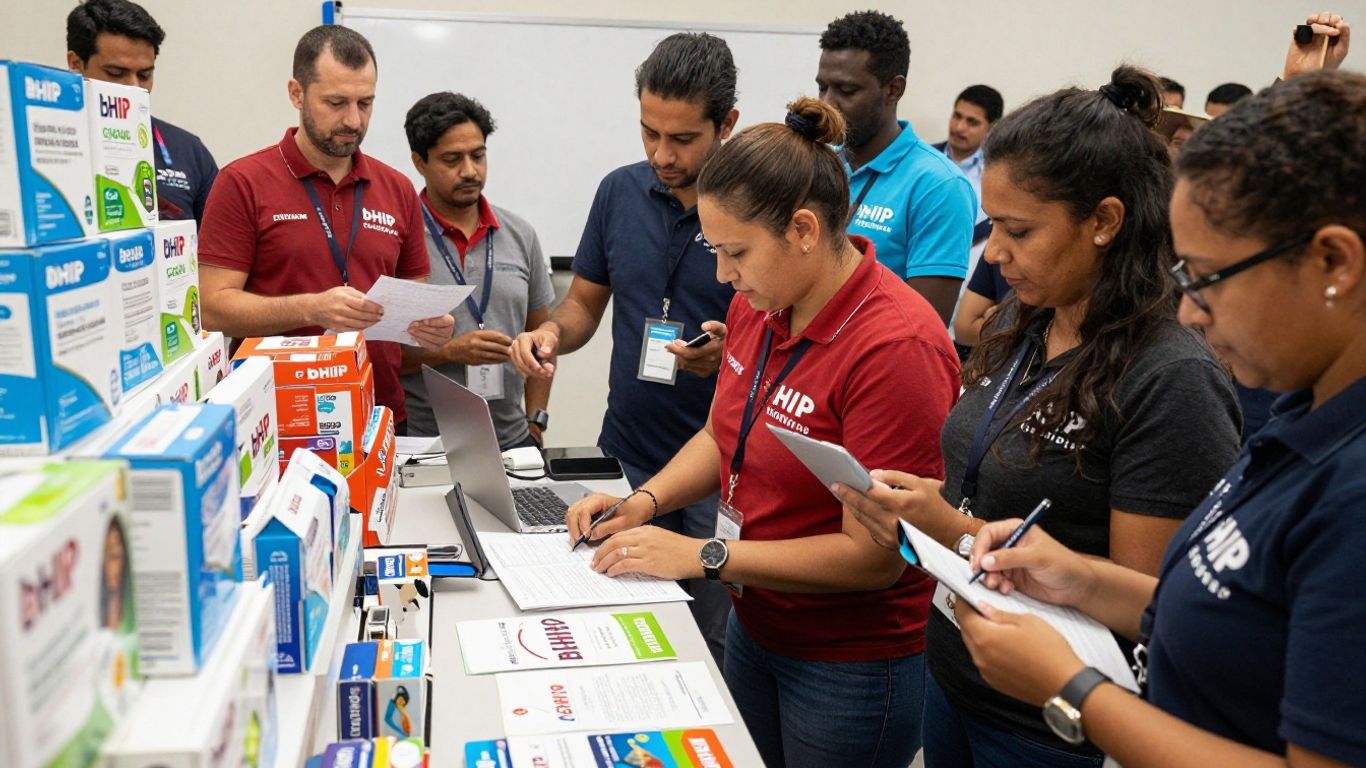
Training and Leadership Matter More Than People Think
Two people can join the same company and have very different experiences partly because they may develop in very different environments.
Good leadership should not create dependency.
It should create competence.
A new distributor may initially need significant guidance.
Over time, the goal should be to help that person understand the products, customers, systems, business model, compensation structure, and skills well enough to operate more independently.
I think about leadership as:
DEPENDENCE → COMPETENCE → INDEPENDENCE → LEADERSHIP
If the entire organization stops functioning whenever one senior leader leaves the room, that is not strong duplication.
A sustainable organization develops more capable people.
My bHIP Review After Building to Blue Diamond
This is where I can give you my personal conclusion.
If I did not believe bHIP provided a platform worth building on, I would not have invested years of my life developing inside it.
I believe in the products I represent.
I value the customer side of the business.
I value the operating infrastructure.
I value the GDP System.
I value the international nature of the company.
I value the training environment.
I value leadership development.
I value having a defined compensation structure with multiple forms of compensation.
And I value being able to build within an existing commercial ecosystem rather than creating every part of a consumer-products company from zero.
But my confidence in bHIP does not come from pretending the business is effortless.
My confidence in bHIP comes from understanding what the business actually requires.
It requires learning.
It requires customers.
It requires commercial activity.
It requires communication.
It requires follow-up.
It requires responsibility.
If you want to build an organization, it requires leadership.
And if you want sustainable results, it requires becoming better at those things over time.
bHIP provides the platform.
People still have to build.
That is my review.
The REVIEW Framework
If you’re evaluating bHIP—or any similar business—I recommend using six questions.
I call them the REVIEW Framework.
R — Real Products
Start by asking whether genuine products and customer value exist.
Don’t begin with the income opportunity.
Begin with what customers are actually purchasing.
E — Economic Activity
Understand where commercial value is being created.
What generates revenue?
What creates eligible commercial results?
Where does compensation fit?
Don’t focus only on what somebody says you could earn.
Understand what economically supports the earning.
V — Verify
Important claims deserve verification.
If somebody tells you something about compensation, costs, returns, products, or company policy, check the appropriate current information.
Don’t build decisions on screenshots and rumors.
I — Infrastructure
Look behind the presentation.
How are orders handled?
What systems exist?
How does the company support operations?
Can the infrastructure support growing commercial activity?
Infrastructure matters.
E — Expectations
Are people telling you the truth about effort and income?
Joining doesn’t guarantee income.
Rank doesn’t guarantee another person’s rank.
One successful leader doesn’t predict everyone’s results.
Expectations should be realistic.
W — Who Said It?
This may be the most overlooked question.
Was the statement made by the company?
An independent distributor?
A customer?
A critic?
A regulator?
A random anonymous account?
Different sources carry different weight.
Always identify who is actually making the claim before deciding what the claim proves.
DON’T JUDGE bHIP FROM ONE COMMENT. REVIEW THE COMPLETE BUSINESS.
Who Is bHIP Right For?
I don’t believe bHIP is automatically right for everybody.
Someone who wants guaranteed wages may prefer employment.
Someone who strongly dislikes customer-facing activity may not enjoy network marketing.
Someone who expects income without developing skills may become disappointed.
Someone who doesn’t want to learn about products or communicate with people may find the model difficult.
But someone who values entrepreneurship, flexibility, customer relationships, personal development, leadership, systems, and the possibility of building commercial activity within an existing platform may find the model worth investigating.
The key word is:
INVESTIGATING
Don’t join because someone pressures you.
Don’t reject it because someone else tells you to.
Understand it.
Don’t Take My bHIP Review as the Final Answer
I’m a Blue Diamond at bHIP.
You already know my perspective.
I believe in the company.
I have chosen to build here.
But:
DON’T JOIN bHIP BECAUSE MICHAEL SARFELT WROTE A POSITIVE REVIEW.
Come and evaluate it yourself.
I invite you to attend one of our free bHIP seminars.
The purpose is to help you understand the company more directly.
You can learn about bHIP’s products, the business model, the relationship between network marketing and e-commerce, the GDP System, the role of a distributor, customer activity, training, and how the 8 forms of compensation fit into the broader business.
More importantly, you can ask questions.
Ask difficult questions.
Ask about products.
Ask about customers.
Ask about compensation.
Ask about what you would actually have to do.
Ask what the business does not guarantee.
I would rather have someone understand the business before making a decision than make a decision based only on excitement.
The seminar is free to attend, with no hidden cost for participating. Attending does not obligate you to join bHIP or build the business.
Send Me a Message on Instagram
If you would like to attend, send me a message directly on Instagram.
Simply write:
“Michael, I’d like to attend the free bHIP seminar.”
I’ll help you understand the next step.
If you’re not ready to attend yet, follow me on Instagram.
Learn more about how I approach bHIP, network marketing, customer development, business systems, and leadership.
You don’t need to rush.
Follow.
Learn.
Ask.
Verify.
Then decide.
Final Verdict: My bHIP Global Review
So what is my final review of bHIP Global?
After years of building inside the company and reaching the Blue Diamond rank, I believe bHIP provides a strong platform for someone who understands what network marketing actually requires and is prepared to develop the necessary skills.
I see value in the combination of products, customers, independent distributors, digital commerce, the GDP System, operating infrastructure, international reach, training, leadership development, and the compensation structure.
But I would never describe bHIP as automatic income.
I would never tell you that everybody succeeds.
I would never tell you my Blue Diamond result predicts yours.
And I would never tell you to stop asking questions because I believe in the company.
In fact, I believe transparency makes the case for bHIP stronger.
A real business should be understandable.
A real product should be evaluable.
A real compensation structure should have conditions.
A real entrepreneur should expect to work.
And a serious decision should survive questions.
That is why my conclusion is positive.
Not because I believe bHIP is a shortcut.
Because I believe it provides a business platform worth understanding.
I believe in bHIP. I have built here. I know the business from the inside. But don’t believe something simply because I say it. Understand the products. Understand the economics. Understand the systems. Verify important information. Ask difficult questions. Then make your own decision.
That is the kind of person I want attending my seminar.
And that is the kind of person I want building beside me.
Frequently Asked Questions
What is bHIP Global?
bHIP is a product-based network marketing and direct-selling business that combines physical products, customers, independent distributors, digital commerce, operating infrastructure, training, leadership development, and a compensation structure. One component of its operating infrastructure is the GDP System — Global Dropshipping Product System.
Is bHIP Global legitimate?
bHIP operates as a product-based commercial business with products, customers, independent distributors, operating systems, and a defined compensation structure. When evaluating legitimacy, don’t rely only on positive or negative online labels. Examine the actual products, customer activity, compensation mechanics, official policies, and the legal requirements applicable to the relevant market.
Is bHIP a pyramid scheme?
The existence of organizational levels does not by itself determine whether something is an illegal pyramid scheme. The more important questions involve economic substance: whether genuine products and customers exist, what commercial activity occurs, how compensation is generated, what activities are rewarded, and what applicable law requires. Verify significant legal claims using appropriate official sources rather than relying solely on social-media opinions.
What products does bHIP sell?
bHIP’s product ecosystem includes products in areas such as nutrition, wellness, beverages, and personal care. Exact products and availability can differ by market. Customers should evaluate individual products based on their intended use, labels, ingredients, directions, price, personal needs, and applicable official product information rather than assuming one product will produce the same experience for everyone.
Can you make money with bHIP?
It is possible to earn compensation through bHIP when eligible commercial results satisfy the conditions of the applicable compensation plan. bHIP has 8 forms of compensation, but those should not be interpreted as eight guaranteed income streams. Joining does not guarantee customers, sales, commissions, rank advancement, profit, or any specific income.
Why does bHIP have negative reviews online?
Online criticism can concern many different things, and not every review is evaluating the same issue. A review may describe a product experience, customer interaction, individual distributor, business expectation, policy question, or another concern. Rather than treating every positive or negative comment as universal evidence, identify what is actually being claimed and verify important factual claims using the appropriate source.
What should I check before joining bHIP?
Understand the products, customer side of the business, commercial model, GDP System, distributor responsibilities, compensation structure, applicable qualifications, current market-specific conditions, potential expenses, official policies, and the work required. Most importantly, distinguish promises made by individuals from official company information and don’t make financial decisions based on guaranteed-income expectations.
Can I learn about bHIP before becoming a distributor?
Yes. I invite you to attend one of our free bHIP seminars to learn about the products, business model, GDP System, customer activity, distributor role, training, and 8 forms of compensation. The seminar is free to attend, with no hidden cost for participating, and attendance does not obligate you to join or build the business. To attend, send me a message on Instagram saying, “Michael, I’d like to attend the free bHIP seminar.” You can also follow me on Instagram and learn more before making your decision.