
Yes, bHIP products are real physical products sold to customers.
But if you are researching bHIP, I believe the better question is not simply whether the products exist.
The better question is:
What exactly are the products, who are they for, how should they be evaluated, and would they still make sense to a customer if there were no business opportunity attached?
I am Michael Sarfelt, a Blue Diamond at bHIP, and I have spent years building around these products, working with customers, developing teams, and learning how important product credibility is in a relationship-based business.
So in this article, I want to explain bHIP products from a practical point of view.
Not through hype.
Not through exaggerated claims.
And not by asking you to believe something simply because a distributor says it.
A good product should be understandable on its own.
That is where I believe the evaluation should begin.
Key Takeaways
bHIP sells real physical consumer products across categories such as nutrition, wellness, beverages, and personal care, although product availability can vary by market.
The existence of a product is only the first part of the evaluation. A customer should also understand what the product is intended for, what it contains, how it is used, how it is priced, and whether it makes sense for their needs.
A bHIP customer does not need to become a distributor simply because they purchase a product. Customer and distributor are two different roles.
Product testimonials can describe real personal experiences, but they should not be treated as guaranteed outcomes for everyone.
The best way to evaluate a bHIP product is to begin with official product information, the label, ingredients, directions, warnings, and relevant market-specific information.
The GDP System — Global Dropshipping Product System — is part of bHIP’s ordering and operating infrastructure. It supports product ordering but does not determine whether a product is right for an individual customer.
A real product does not automatically answer every question about a business opportunity. Products, compensation, policies, costs, and distributor behavior should still be evaluated separately.
Are bHIP Products Real? The Short Answer
Yes.
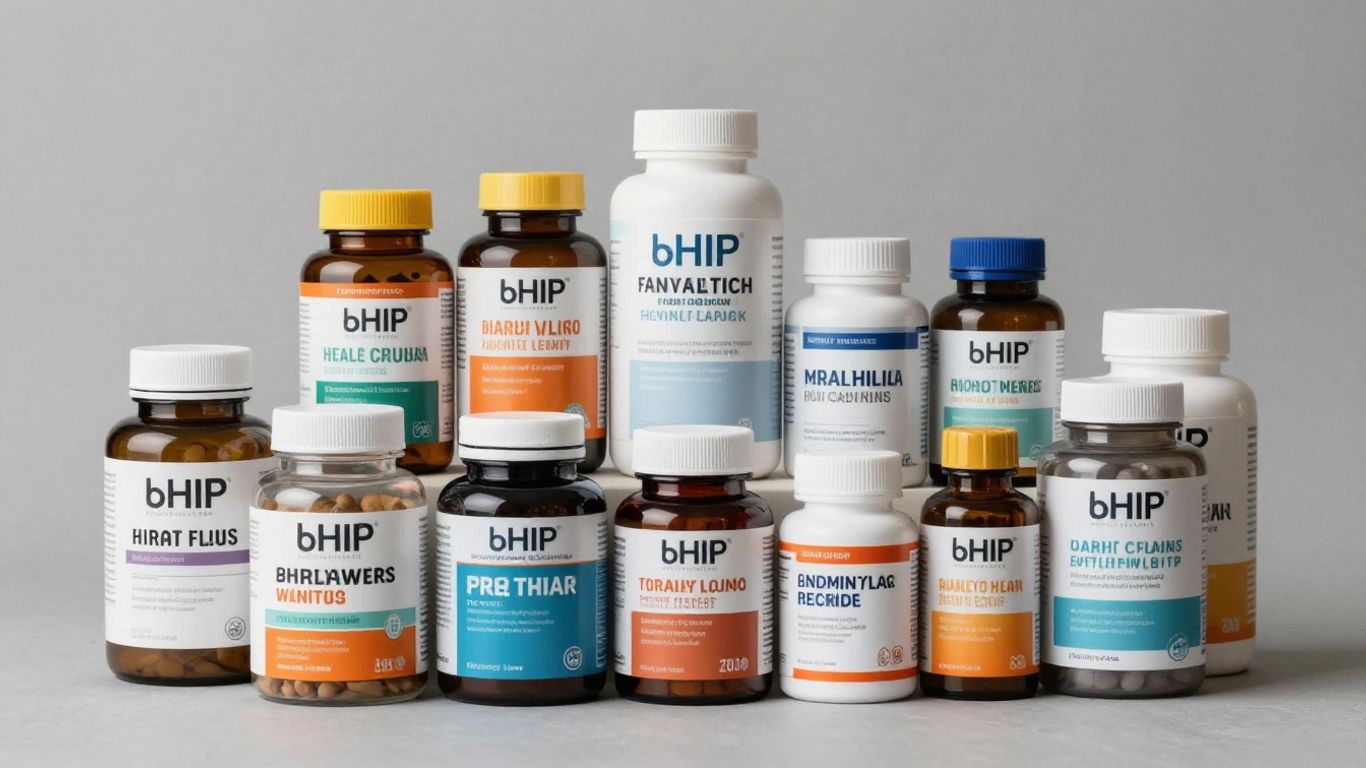
bHIP products are real consumer products.
Customers purchase them, use them, and interact with them as products rather than simply as entries inside a compensation system.
That is important.
However, I would never tell somebody that the conversation should end there.
A physical product can be real while still requiring a customer to decide whether it is appropriate for them.
That is why I prefer this distinction:
REAL PRODUCT ≠ RIGHT PRODUCT FOR EVERY PERSON
A product can exist.
A product can be properly packaged.
A product can have ingredients and instructions.
But the customer still needs to ask whether it fits their needs, expectations, preferences, and budget.
That is what responsible product evaluation looks like.
What Does “Real” Actually Mean?
When people ask whether bHIP products are real, they may actually be asking several different questions at the same time.
They may be wondering whether physical products actually exist.
They may be wondering whether people genuinely purchase them.
They may be wondering whether the products are only there to support the business opportunity.
They may be questioning whether the labels and ingredients are legitimate.
They may be asking whether the products do what people claim they do.
Or they may simply want to know whether they are buying something genuine rather than something questionable.
Those are very different questions.
That is why I think the word “real” needs to be unpacked.
A product can be physically real and still need to earn the customer’s trust through clarity, quality, value, responsible communication, and experience.
So I would not stop at:
“Does the product exist?”
I would continue with:
“What exactly is this product, how is it intended to be used, and what value does it offer me as a customer?”
That is a much better standard.
What Types of Products Does bHIP Sell?
bHIP has built its product ecosystem around consumer categories such as nutrition, wellness, beverages, and personal care.
Exact products can differ depending on the market.
That matters because people sometimes assume every bHIP market has exactly the same catalog.
It may not.
Products can differ in availability, positioning, packaging, or local conditions.
So if you are researching a specific bHIP product, I recommend checking the current official information for the market where you intend to purchase it.
That is much more reliable than relying on an old image, an outdated social-media post, or information from another country.
Would the Product Still Make Sense Without the Business Opportunity?
This is one of the most important questions I believe anyone should ask.
Forget the business opportunity for a moment.
Forget the compensation plan.
Forget the team.
Forget the distributor rank.
Now look at the product.
Would somebody still have a reason to buy it?
That question is powerful because it forces you to evaluate the product as a consumer product rather than as a tool for earning commissions.
A product should be able to create customer value independently of the business opportunity attached to it.
That does not mean every person needs to want every product.
No consumer brand works that way.
It simply means the product should have a reason to exist beyond someone’s desire to qualify for compensation.
I believe that is a healthy standard for any product-based network marketing company.
Customers and Distributors Are Different
This distinction is also important.
CUSTOMER ≠ DISTRIBUTOR
Someone can purchase bHIP products because they want to use the products.
They do not need to build a business simply because they are a customer.
Likewise, a distributor should not look at every customer as someone who must eventually become a distributor.
Those are separate decisions.
A healthy product business needs genuine customers.
People should be able to evaluate whether they want the product without feeling that they also need to become entrepreneurs.
That creates a clearer relationship between the product and the customer.
Are bHIP Products Only There to Support Recruitment?
I do not believe products should exist merely to justify a compensation structure.
That would be the wrong way to think about a product-based business.
The product should have customer value independently of recruitment.
That is why I keep coming back to the same question:
Would this product still make sense if there were no business presentation attached to it?
If the answer is yes, then you are evaluating it as a consumer product.
If the only reason someone is purchasing a product is because they feel they need to do so for the business, that is a different situation and deserves more careful thought.
The customer should matter on their own.
Not only as a number inside an organization.
How Should You Evaluate the Quality of a bHIP Product?
I do not think the right approach is for a distributor to simply tell you:
“This product is amazing.”
That may reflect enthusiasm.
It does not replace evaluation.
Instead, look at what the product actually contains.
Read the label.
Understand the intended use.
Look at the ingredients.
Look at the directions.
Understand how often the product is intended to be used.
Look for warnings or cautions.
Look at the price.
Compare it with relevant alternatives.
And ask whether the product fits your own goals and circumstances.
That is much more useful than simply asking whether somebody else loves it.
Start with the official product information. Use the distributor as a source of guidance, not as a replacement for the label.
That is an important principle.
Are bHIP Products High Quality?
Quality should be evaluated rather than declared.
Different people use the word “quality” differently.
One customer may care most about ingredients.
Another may care about formulation.
Another may care about convenience.
Another may care about packaging.
Another may care about price.
Another may care about how the product fits into their routine.
So rather than making a universal claim that every person must consider every bHIP product superior, I prefer a more responsible position.
I represent bHIP products because I believe they are worth representing.
That is my personal conclusion based on my experience.
But my belief should not replace your judgment.
Understand what you are buying.
Then make your own decision.
Are bHIP Products Worth the Price?
This is another question where there is no universal answer.
Value is different from price.
A lower price does not automatically mean better value.
A higher price does not automatically mean higher quality.
The right comparison depends on what you are comparing.
When you evaluate price, look at the actual product, the amount or serving size, ingredients, how frequently it is intended to be used, convenience, customer experience, and relevant alternatives.
Then decide whether the overall value makes sense for you.
Expensive does not automatically mean better. Cheaper does not automatically mean better value.
A responsible distributor should be comfortable with customers comparing products.
If the product makes sense after comparison, that is stronger than asking the customer not to compare at all.

What Do Product Testimonials Actually Prove?
Testimonials are powerful because people naturally trust stories.
If someone says:
“I loved this product.”
that may be completely true for them.
If somebody says they had a particular personal experience, that experience may be genuine.
But:
PERSONAL EXPERIENCE ≠ UNIVERSAL RESULT
This is especially important with wellness and nutrition products.
Different people have different bodies, lifestyles, diets, habits, expectations, and health circumstances.
One person’s experience does not automatically predict another person’s outcome.
That means customer testimonials should be viewed as experiences, not guarantees.
The same standard should apply whether the testimonial is positive or negative.
One customer loving a product does not prove everyone will.
One customer disliking a product does not prove nobody will find value in it.
Experiences give us information.
They do not give us certainty.
What Should You Avoid Believing About Wellness Products?
This is an area where responsible communication matters.
A wellness or nutrition product should not automatically be treated as though it cures, treats, prevents, or diagnoses a medical condition simply because somebody online makes that claim.
The fact that a customer or distributor says something does not automatically make that statement an established medical fact.
This is why I believe distributors need discipline when communicating about products.
Enthusiasm should never replace accuracy.
If the official product information makes a specific claim, understand that claim in its proper context.
Do not automatically expand it into something much larger.
And if somebody tells you that a product will definitely solve a medical problem, be cautious.
When Should You Speak With a Healthcare Professional?
If you are pregnant, taking medication, managing a health condition, dealing with allergies, or simply unsure whether a nutrition or wellness product is appropriate for you, speak with a qualified healthcare professional.
That is not a weakness in the product evaluation process.
It is responsible behavior.
A distributor can help you understand where to find product information.
They should not replace your doctor, pharmacist, or other qualified healthcare professional.
Knowing the limits of your role is part of professionalism.
How Can You Verify a bHIP Product?
If you want to evaluate a bHIP product properly, begin with the official information available for that specific product and market.
Look at the name.
Look at the packaging.
Read the label.
Read the ingredients.
Read the directions.
Read any warnings or cautions.
Confirm the product is actually available in your market.
If something is unclear, ask for clarification through an appropriate official or authorized channel.
This is a much stronger process than relying only on screenshots or comments from social media.
Verification is more useful than assumption.
How Can You Make Sure You Are Buying a Genuine bHIP Product?
If your question is whether the product you are purchasing is genuinely from bHIP, use the official purchasing route available in your market.
Be cautious when purchasing products through unknown third-party sellers where you cannot verify the source.
That is good practice with almost any consumer product.
The closer you stay to the official purchasing environment, the easier it is to verify what you are receiving and obtain appropriate support if you have a question.
Where Does the GDP System Fit Into Product Ordering?
bHIP’s GDP System — Global Dropshipping Product System is part of the company’s operating infrastructure.
Customers can use bHIP’s own system to place orders, while the relevant infrastructure supports the operating process behind those orders.
The basic idea can be understood as:
CUSTOMER → GDP SYSTEM → ORDER → PROCESSING → FULFILLMENT → LOGISTICS → DELIVERY
GDP is not the product itself.
It does not determine whether a product is suitable for a customer.
It is part of the system that supports ordering and fulfillment.
That distinction matters.
The product needs to create customer value.
The operating system helps process the transaction.
Does the Existence of Real Products Automatically Prove Everything About the Business?
No.
This is another important distinction.
The existence of genuine physical products is relevant when evaluating a product-based company.
But it does not automatically answer every question about the business opportunity.
Products should be evaluated as products.
Compensation should be evaluated as compensation.
Policies should be evaluated as policies.
Business costs should be evaluated separately.
Distributor behavior should be evaluated separately.
The economics of the business should be understood separately.
A real product is an important part of the picture. It is not the entire picture.
That is why I prefer people to evaluate bHIP completely rather than reducing the entire company to one positive or negative observation.
Why Real Customers Matter
A real product business needs real customers.
A customer should not simply exist as an entry on a compensation chart.
A customer should be a person who chose to purchase something because they believed the product created value for them.
That is the commercial foundation.
REAL CUSTOMER → REAL PRODUCT → REAL TRANSACTION
The relationship may continue after the transaction.
The distributor may follow up.
The customer may have questions.
The customer may choose to purchase again.
Or they may not.
Repeat purchasing should never be treated as guaranteed.
But good customer experience gives the relationship a chance to continue naturally.
Customer Service Matters After the Sale
A sale is not the end of the responsibility.
If a customer has questions, help them find accurate information.
If they are confused about how to use a product, direct them toward the official directions.
If they have a problem with an order, help them understand the appropriate process.
If they dislike the product, listen.
Do not turn every concern into an argument.
Trust is built by how people behave after the transaction, not only before it.
That matters in a relationship-based business.
My PRODUCT Framework for Evaluating bHIP Products
I use a simple framework to explain how I believe products should be evaluated.
I call it the PRODUCT Framework.
P · R · O · D · U · C · T
P — Purpose
Understand what the product is intended for.
Do not begin with exaggerated promises.
Begin with the actual purpose of the product.
R — Read
Read the official label and current product information.
Understand ingredients, directions, warnings, and relevant information before relying on another person’s interpretation.
O — Objective
Try to evaluate the product objectively.
Do not decide only because you like or dislike the person recommending it.
Separate the product from the personality.
D — Demand
Ask whether genuine customers have a reason to want the product.
Would the product still make sense if there were no business opportunity attached?
U — Use
Understand how the product is intended to be used.
Correct use matters.
Do not invent your own instructions because somebody on social media suggested something different.
C — Compare
Compare fairly.
Look at relevant alternatives.
Compare what is actually similar rather than choosing a random cheaper or more expensive product and assuming the comparison is meaningful.
T — Trust
Trust should be built through accurate information, responsible recommendations, and realistic expectations.
Do not ask customers to trust exaggerated claims.
Give them enough information to make their own decision.
BEFORE YOU TRUST THE RECOMMENDATION, UNDERSTAND THE PRODUCT.

My View as a Blue Diamond at bHIP
I would not have spent years building with bHIP if I did not believe the products gave me something legitimate to represent.
I am comfortable representing them.
I believe in the product side of the company.
And I believe customers should be able to look at those products independently of the opportunity.
But my experience does not mean you should switch off your own judgment.
In fact, I want the opposite.
I want customers to understand what they are purchasing.
I want distributors to understand what they are representing.
And I want the relationship between both sides to be based on accurate information rather than hype.
Try to understand the product as a customer before you judge it as a business tool.
That principle creates stronger customers.
It also creates better distributors.
Should You Use a Product Before Recommending It?
Personal experience can help a distributor speak more naturally about a product.
But even personal use does not give someone permission to make claims the product information does not support.
There is a difference between saying:
“This was my personal experience.”
and saying:
“This will happen to you.”
Those statements are not the same.
Responsible product communication keeps that distinction clear.
That is especially important in health and wellness categories.
What Makes a Product Business Sustainable?
A product business becomes stronger when customers genuinely want what is being sold.
Not because they feel forced to purchase.
Not because they believe buying guarantees business success.
Not because they are trying to impress an upline.
But because the product itself has value for them.
That is why customer demand matters.
A strong product creates a reason for the customer relationship to exist independently of recruitment.
And that makes the business healthier.
See the Products Before You Judge the Opportunity
If you are trying to understand whether bHIP products are real, I think the best approach is not to rely only on what you read online.
Look at the products.
Understand them.
Ask questions.
Learn how the ordering system works.
Learn how the products connect to the broader bHIP business model.
That is why I invite people who are genuinely curious to attend one of our free bHIP seminars.
During the seminar, you can learn about the products, the customer side of the business, the GDP System, the distributor role, the network marketing model, and bHIP’s 8 forms of compensation.
Most importantly, you can ask questions.
Ask about the products.
Ask about the ingredients.
Ask how customers purchase.
Ask how distributors work.
Ask what the business does and does not guarantee.
The seminar is free to attend, with no hidden cost for participating. Attending does not obligate you to join bHIP or build the business.
Send Me a Message on Instagram
If you would like to attend, send me a message directly on Instagram.
You can simply write:
“Michael, I’d like to learn about the bHIP products and attend the free seminar.”
I’ll help you understand the next step.
If you’re not ready to attend yet, you can also follow me on Instagram.
Learn first.
Look at the products.
Ask questions.
Understand the business.
Then make your own decision.
Final Thoughts From Michael Sarfelt
So, are bHIP products real?
Yes.
They are real physical consumer products.
But I do not believe that should be the end of your investigation.
The stronger questions are:
What does the product actually contain?
What is it intended to do?
How is it used?
Does it fit your needs?
Does the value make sense to you?
Would you consider buying it even if no business opportunity existed?
Are the claims being made consistent with the official product information?
Those questions tell you far more.
For me, the product side of bHIP is important because the business should have something genuine to offer customers.
But I also believe that product credibility becomes stronger when distributors communicate responsibly.
Do not exaggerate.
Do not invent health claims.
Do not promise identical experiences.
Do not pressure customers to become distributors.
Explain what the product is.
Help people find accurate information.
Let customers decide.
That is how trust is built.
And in a relationship-based business, trust may be one of the most valuable assets you have.
YES, bHIP PRODUCTS ARE REAL. BUT “REAL” IS ONLY THE FIRST QUESTION.
The better question is whether the product creates real value for the customer.
That is the standard I believe products should meet.
Frequently Asked Questions
Are bHIP products real physical products?
Yes. bHIP sells physical consumer products to customers. Exact products vary by market, but the company’s product ecosystem includes categories such as nutrition, wellness, beverages, and personal care.
What kind of products does bHIP sell?
bHIP offers consumer products across categories that can include nutrition, wellness, beverages, and personal care. Because product availability may differ between countries or markets, customers should consult current official product information relevant to where they live.
Do I need to become a distributor to buy bHIP products?
No. Customer and distributor are different roles. Someone may purchase bHIP products as a customer without deciding to build the business. Liking a product does not automatically mean someone should become a distributor.
Are bHIP products medically proven?
Individual products should be evaluated according to their official labels, ingredients, authorized claims, intended use, and applicable product information. Customers should not assume that personal testimonials prove a product can treat, cure, prevent, or diagnose medical conditions. Anyone with medical concerns should consult a qualified healthcare professional.
How can I check the ingredients in bHIP products?
Begin with the official product information and the product label applicable to your market. Read the ingredients, directions, warnings, and other relevant information. If anything is unclear, ask through an appropriate official or authorized channel rather than relying only on social-media claims.
Are bHIP products worth the price?
Value depends on the individual product and customer. Compare the product’s ingredients, quantity or serving size, intended use, convenience, price, and relevant alternatives. A higher price does not automatically mean better quality, and a lower price does not automatically mean better value.
How can I make sure I’m buying a genuine bHIP product?
Use the official purchasing route available in your market and be cautious when purchasing from unknown third-party sellers where the source cannot be verified. Official channels make it easier to confirm what you are purchasing and obtain support when necessary.
Can I learn about bHIP products before joining the business?
Yes. You can attend one of our free bHIP seminars to learn about the products, customers, GDP System, business model, distributor role, and 8 forms of compensation. The seminar is free to attend, with no hidden cost for participating, and attendance does not obligate you to join or build the business. To attend, send me a message on Instagram saying, “Michael, I’d like to learn about the bHIP products and attend the free seminar.” You can also follow me on Instagram and learn more before deciding.